
Verified Inclave Casino Safety Australia
 Available in AU
Content
Inclave is not the casino licence holder. It is the identity and login layer used by connected casino operators. Its current policies describe passkeys, device approval and encryption for the Inclave service, but those controls do not tell you whether a connected casino is licensed, reputable or lawful to provide gambling services in Australia.
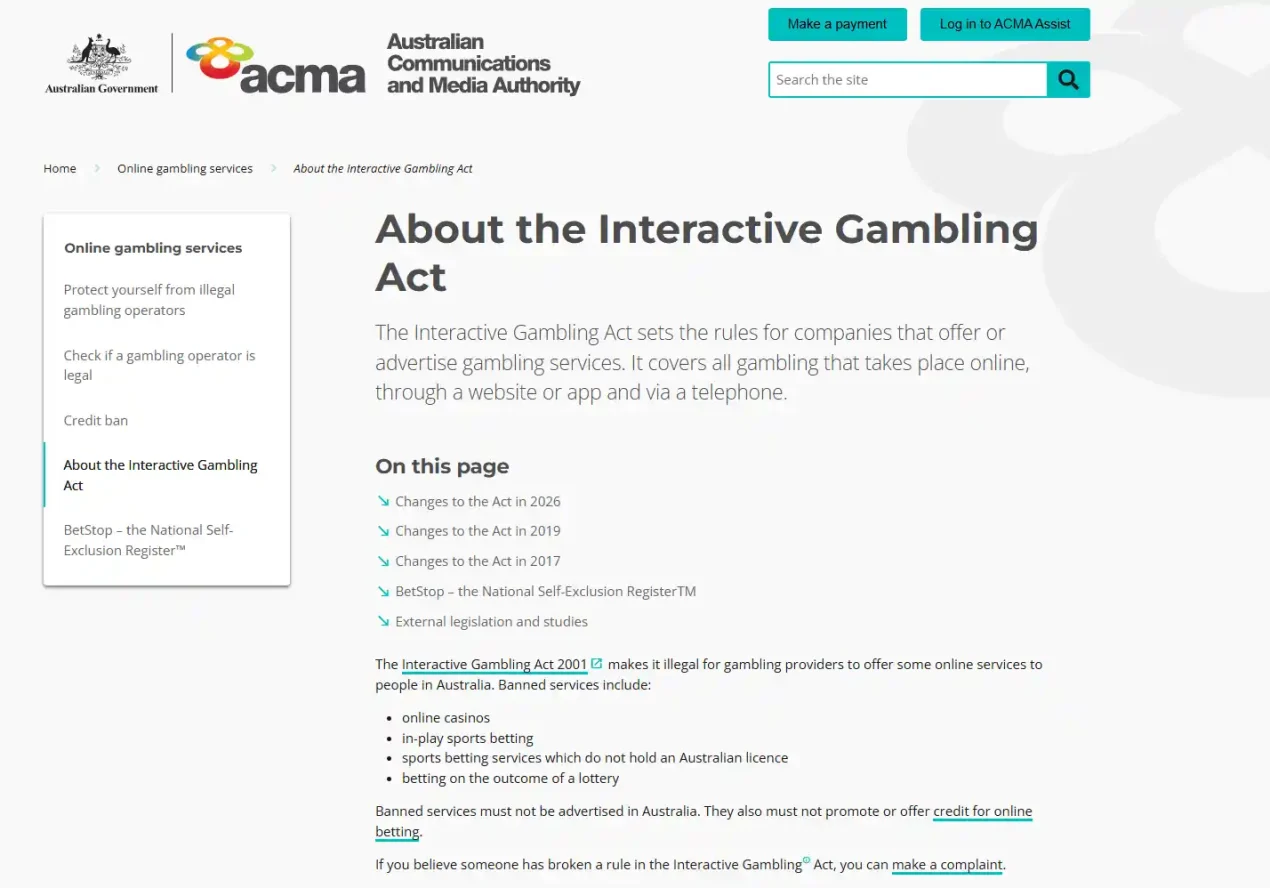
No Australian gambling-operator licence for Inclave was verified in ACMA’s licensed provider register. More importantly, Australian federal law restricts the provider side of online casino gambling: ACMA states that online casinos are prohibited interactive gambling services when offered to people in Australia. The legal and trust check therefore has to be performed on each connected operator, not on the Inclave login alone.
Inclave Casino Security Standards: Licensing, ACMA Rules and Fair Play
The word “safe” becomes misleading if three different questions are collapsed into one. Inclave can have competent account-security controls while a connected gambling operator has weak consumer protections. A casino can hold a licence somewhere overseas without being licensed to provide a regulated wagering service in Australia. And a site can be technically accessible from Australia without that access proving the service is lawful here.
| Layer | Question | What to verify |
|---|---|---|
| Inclave identity layer | Is the login and identity system designed to protect account access and personal data? | Authentication method, device approval, privacy policy, verification handling and account-recovery controls |
| Casino operator | Who actually takes bets and holds player funds? | Operator identity, licence jurisdiction, terms, cashier rules, complaints route and track record |
| Australian legal position | Can that type of service lawfully be offered to people in Australia? | ACMA guidance, the Interactive Gambling Act 2001, the licensed-provider register and current enforcement |
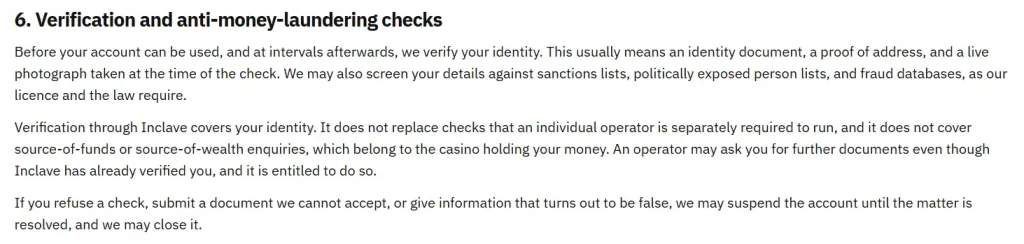
This three-layer model is the most useful way to assess an Inclave-connected site. The shared login can make separate casinos feel like one network, but it does not merge their legal responsibility. Before registering with any operator, it is crucial to understand the Inclave verification and KYC checks required to keep your account secure.
What Inclave security covers
Inclave’s current privacy policy says the service does not use passwords for login. It uses passkeys and device approval, and states that service data is encrypted in transit and at rest. The policy also separates Inclave data from casino-operator data: Inclave handles identity, verification information, approved devices and login records, while each operator handles deposits, withdrawals, bets, bonuses and session history at that brand.
That separation is useful because it tells you what a positive security signal actually means. A well-protected Inclave account can reduce the risk of password reuse or unauthorised login. For a complete overview of the network and its features, visit our comprehensive Inclave casinos guide for Australian players. It does not validate a casino’s payout practices, game terms, licence, complaints process or solvency.
For the mechanics of authentication rather than the legal analysis, use the login guide. For identity checks and document handling, see KYC and identity verification.
Why the casino operator still matters most
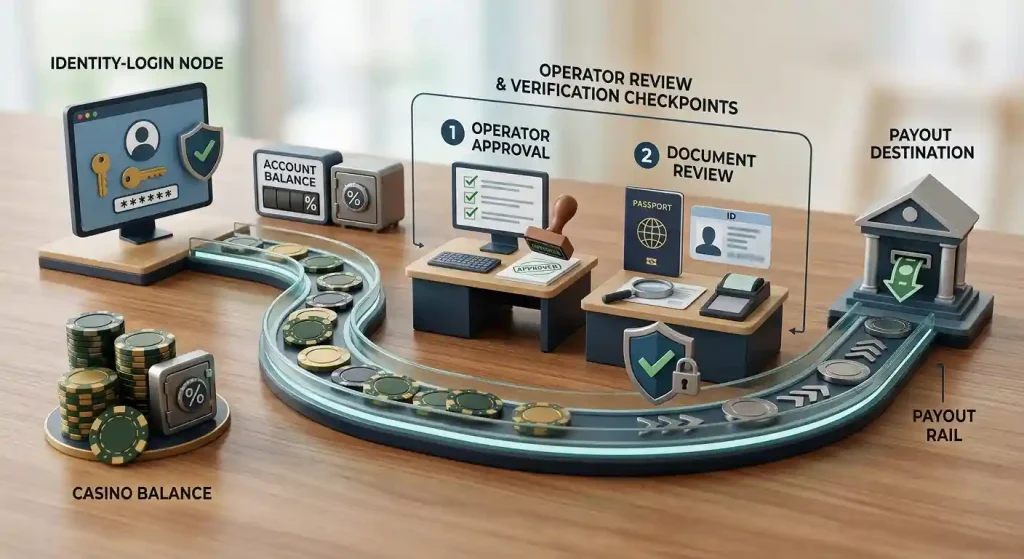
Inclave’s terms are explicit about the split. Inclave does not run casinos, hold player money, process deposits or withdrawals, deal cards, operate slots, issue bonuses or decide whether bets win or lose. Each connected operator is a separate business with its own licence, cashier and terms.
That means the highest-value trust checks happen after you identify the operator. Before depositing, find the legal entity named in the casino terms, the gambling licence the operator relies on, the regulator or licensing authority behind that licence, and the route available for complaints. Then check the operator’s withdrawal rules and identity requirements rather than assuming Inclave determines them.
The cashier guide explains how to separate the Inclave account from operator-level payment handling. This distinction is especially important where a smooth shared login creates an impression that the same company controls the entire experience.
Does Inclave have an Australian gambling licence?
Inclave does not appear as an Australian gambling operator in the ACMA licensed-provider register. That result is consistent with Inclave’s role as an identity and login service rather than the business taking bets.
Do not turn that finding into a broader claim that every connected casino is licensed or unlicensed in Australia. The licence question belongs to the gambling operator. ACMA’s register is designed for licensed interactive gambling providers, particularly regulated wagering services that are permitted to operate in Australia. A casino connected to Inclave must be assessed in its own name and legal-entity context.
This is also why a statement such as “Inclave is licensed in Australia” would be misleading. The relevant question is not whether a shared authentication platform appears in a gambling-provider register, but whether the actual service taking bets is a permitted and properly licensed service under Australian rules.
What Australian law says about online casinos
The key federal law is the Interactive Gambling Act 2001. ACMA’s current public guidance says it is illegal for gambling providers to offer certain online services to people in Australia, including online casinos. ACMA describes online casino-style games such as blackjack, roulette, poker and slots offered over the internet to Australian customers as prohibited interactive gambling services.
The wording matters because the prohibition is framed around the provider supplying the service. It is not accurate to turn that into a blanket statement that an Australian player commits an offence merely by accessing or playing at an offshore casino. The consumer can still face substantial practical risk, especially because an illegal operator may sit outside the consumer-protection and complaints framework available for lawful Australian services.
ACMA also warns that prohibited interactive gambling services must not be advertised in Australia. So an operator’s marketing visibility, use of Australian language or acceptance of Australian traffic does not prove that its service is legal here.
Technical access is not the same thing as Australian legal authorisation.
How ACMA checks licensed services
ACMA maintains a register of licensed interactive gambling providers. Its current consumer guidance says an online wagering service must be on the register to operate legally in Australia. State and territory licensing arrangements also remain relevant because Australian wagering licences are issued through those jurisdictions.
That register should not be misread as a list of legal online casinos. Casino-style online gambling is treated differently under the federal framework. The register is most useful when checking regulated wagering services that can legally be provided with an Australian licence.
For an Inclave-connected casino, the practical sequence is:
- Identify the actual gambling operator from the casino’s terms.
- Determine what type of service it provides: casino-style gaming, wagering, or both.
- Check ACMA’s current guidance for whether that service category is permitted.
- If it claims an Australian wagering licence, search the ACMA register for the operator and trading name.
- Check the named state or territory licensing authority where relevant.
- Do not treat an overseas licence as proof of Australian authorisation.
Website blocking and enforcement are active
ACMA continues to investigate illegal gambling services and request ISP blocking of websites found in breach of the Interactive Gambling Act. Its blocked-sites guidance explains that blocking can be used for prohibited online casinos, unlicensed regulated wagering services and advertising for those services.
The enforcement record matters because it shows that Australian rules are not merely theoretical. ACMA’s April to June 2026 compliance report says website blocking continued against services found in breach, with many of those services offering casino-style blackjack, roulette, poker and slots. The regulator also publishes ongoing investigations and blocking updates.
A site being reachable today therefore does not guarantee it will remain reachable, and a domain disappearing or changing should not automatically be interpreted as a technical problem. For an offshore operator targeting Australians, regulatory disruption is a real operational risk that can affect access, support and the ability to resolve disputes.
Responsible gambling: Inclave exclusion and BetStop are different
Inclave’s current responsible-gaming page says it can control access at the network level. It describes exclusion as applying across the Inclave network, while deposit, loss and wager limits remain with the individual casino because the operator holds the money. This is a meaningful distinction: a network-level break can close several Inclave-connected doors at once, but it is not a universal gambling exclusion.
BetStop is a different system. ACMA describes BetStop as the National Self-Exclusion Register for Australian licensed online and phone wagering providers. Registering with BetStop excludes a person from those licensed wagering services in one step.
Do not assume BetStop automatically covers every offshore casino that uses Inclave. An offshore casino outside the Australian licensed wagering system is not brought into BetStop simply because its login is connected to Inclave. Likewise, an Inclave network exclusion does not automatically block gambling sites outside the Inclave network.
| Tool | Scope | What it does not prove |
|---|---|---|
| Inclave exclusion | Access controls across the Inclave network | That every gambling site is blocked, or that every operator has the same money limits |
| Operator limits | Deposit, loss, wager and other controls at one casino | That the same limits apply at other connected casinos |
| BetStop | Australian licensed online and phone wagering providers | That every offshore casino is covered |
The 2026 gambling reforms: what changed and when
Australian gambling regulation changed again in August 2026. The Interactive Gambling Amendment (Gambling Reform) Bill 2026 passed Parliament on 19 August 2026 and received assent on 26 August as the Interactive Gambling Amendment (Gambling Reform) Act 2026. Government guidance says the reform package includes tighter wagering-advertising rules, restrictions on inducement marketing, stronger BetStop settings, expanded enforcement against illegal gambling services and measures dealing with emerging online lottery products.
The government’s current reform page states that the reforms commence from 1 January 2027. That date is important because it separates enacted law from rules that are already operational. For a page published or updated around the transition, check the latest ACMA implementation guidance rather than assuming every new measure took effect on the day Parliament passed the Bill.
The reforms reinforce the broader lesson of this page: Australian gambling compliance is service-specific and changes over time. A statement copied from an older review can become wrong even if the Inclave login itself has not changed.
How to judge whether a connected casino is a sensible choice
A binary “safe” label is less useful than a short verification routine. Before using an Inclave-connected casino, work through the operator rather than the login brand.
- Identify the operator. Find the legal entity named in the casino terms and privacy policy.
- Check the licence claim. Verify the jurisdiction and regulator instead of trusting a logo in the footer.
- Check Australian relevance. Use ACMA guidance to determine whether the service category can legally be offered to people in Australia.
- Review withdrawals before depositing. Look for current operator rules on verification, limits, fees and processing, and avoid relying on numbers copied from another Inclave casino.
- Separate support routes. Login and identity problems can belong to Inclave, while balance, bonus, game and withdrawal disputes belong to the casino operator.
- Use responsible-gambling controls at every relevant layer. Network exclusion, operator limits and BetStop serve different scopes.
- Expect regulatory change. Recheck ACMA and the operator’s own terms if the review is old or the service has changed domains.
This approach produces a more defensible decision than treating the presence of Inclave as proof that a casino has passed legal, financial and operational checks.
Red flags that matter more than the shared login
Some warning signs belong entirely to the operator layer. Be cautious where the casino does not clearly identify the company taking bets, makes a licence claim that cannot be matched to a regulator or licence holder, gives contradictory withdrawal terms, or directs complaints only through informal messaging channels. A polished Inclave sign-in does not resolve those issues.
Also distinguish marketing from evidence. Australian imagery, AUD balances, local slang, fast registration or a domain accessible from an Australian connection do not establish Australian authorisation. The stronger evidence is regulatory: the type of service, the operator identity, the relevant licence and the current ACMA position.
For payment-specific due diligence, including why cashier terms stay operator-specific, use the payment guidance above.
How to assess marketing and comparison claims
Reviews can become misleading when they describe an Inclave-connected casino as “licensed through Inclave” or use the Inclave security model as shorthand for operator safety. Those formulations mix separate legal relationships. A responsible review should name the operator, identify the licence it actually relies on, and explain whether that service category can be offered to people in Australia under current ACMA guidance.
The same applies to interface images and badges. A current Inclave login screen can demonstrate how authentication works, but it cannot prove that the casino behind the login is on an Australian register. Regulatory evidence needs to come from the relevant regulator or licence register, not from the presence of a shared sign-in system.
Bottom line
The Inclave Australia guide explains the wider network model. Inclave can be assessed as an identity platform: its current policies describe passkeys, device approval, encryption and network-level responsible-gambling access controls. But those features do not make every connected casino safe or legal in Australia.
The gambling operator remains responsible for the games, money, bonuses, withdrawals and licence. ACMA’s current guidance says online casinos are prohibited interactive gambling services when offered to people in Australia, and enforcement includes investigations and ISP website blocking. No Australian gambling-operator licence for Inclave was verified, which is consistent with its role as a login service rather than a casino operator.
For Australians, the useful question is therefore not “Is Inclave legal?” in isolation. Ask who is taking the bet, what service they are providing, what licence they actually hold, whether that service is permitted under Australian rules, and what protections remain if something goes wrong.
This material was created by the Inclave Australia Guide team.
Related posts
Fast Inclave Casino Withdrawals Australia
Fast Inclave Verification and KYC Australia